Le Boa
Pedro PáramoLe Boa is one of Pedro Páramo’s armed men, a returning agent whose brief exchanges with Pedro expose how political allegiance in the region can change with events and opportunity. His choice to follow Padre Rentería after the priest takes up arms places religious language beside the unsettled calculations of local armed power.
Identity and Role
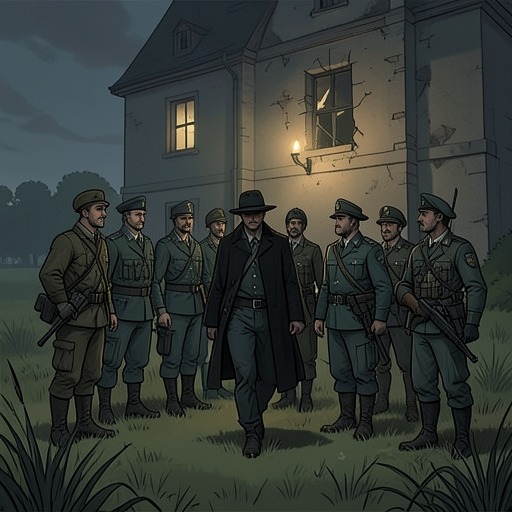
Le Boa is associated with Pedro Páramo’s armed force and repeatedly comes back to report on the changing situation. The narrative gives little personal history or description; it defines him chiefly through those returns, his references to the men under his command, and the decisions he makes about which side to join. His importance in this episode lies less in an individual backstory than in the practical choices his presence brings before Pedro.
The men’s status is precarious. Le Boa acknowledges that they are irregulars and are regarded as rebels, a description that complicates any simple division between government forces and opposition. They have weapons and follow leaders, but their position does not amount to secure membership in an established army. Their allegiance is something to be decided and reconsidered as the political situation shifts.
Changing Allegiances
Le Boa’s reports trace a sequence of changing alignments: the men have been with Venustiano Carranzo and then with Álvaro Obregón. The brief, matter-of-fact way these affiliations are relayed gives political change the quality of practical news rather than settled conviction. The scene does not explain the men’s earlier campaigns or what each change has cost them; it does establish that their loyalties have already moved more than once.
When Le Boa reports that peace has been made and the men are idle, Pedro tells him not to disarm them because the calm will not last. That instruction gives the uncertainty a concrete consequence: even without active fighting, the armed group is to remain prepared. Le Boa’s recurring visits thus connect the changing political landscape to the continuing readiness of Pedro’s men, whose weapons remain in reserve rather than being put away.
Padre Rentería and Le Boa’s Decision
The question changes when Le Boa reports that Padre Rentería has taken up arms. He asks whether his men should side with the priest or against him. Pedro gives a clear strategic answer: they should support the government. Le Boa’s reminder that the men are irregulars, regarded as rebels, makes the recommendation less straightforward than it sounds. Their status already places them outside a simple, secure alignment, and the priest’s entrance into the conflict presents another possible allegiance.
Le Boa then states that he will support Padre Rentería. He gives two reasons: he likes the priest’s rallying cry, and he believes that joining him may bring salvation. The choice is therefore presented through both attraction to a slogan and a religious hope. The evidence does not establish whether salvation is a literal expectation, a wry justification, or both; it does show that Le Boa invokes it while deciding which armed side to join.
Pedro does not persuade him otherwise. After Le Boa announces his decision, Pedro leaves him to do as he wishes. The exchange distinguishes Pedro’s practical advice from Le Boa’s choice: Pedro recommends the government, but the man who returns with the question selects the priest instead. Le Boa is not shown carrying out that decision or describing what follows, so the episode records his declared allegiance rather than its eventual outcome.
Character and Narrative Significance
Le Boa’s repeated return is itself a defining detail. He reappears as the political situation changes, carrying reports of new alignments, peace, idleness, and renewed armed commitment. Against this recurring movement, Pedro’s order to keep the men armed suggests that a pause in fighting is not the same as lasting security. The scene’s instability is measured through what the men might do next, not through a settled political order.
His decision also brings together forces that the episode does not resolve into a single motive. Le Boa weighs Pedro’s recommendation, the men’s rebel status, the priest’s military action, the appeal of a rallying cry, and the promise of salvation. The result is a character sketched through allegiance under pressure: a returning armed follower whose loyalties are changeable, yet whose stated reasons combine immediate political choice with religious hope. Because the narrative supplies no further account of his fate or of the consequences of backing Padre Rentería, that choice remains pointedly open.